
Endodontic Microsurgery
Root-end surgery (apicoectomy) that can save a tooth when infection remains after a root canal.
Most teeth heal after a root canal or retreatment. When infection lingers at the tip of a root, endodontic microsurgery can still save the tooth. The most common procedure is an apicoectomy, also called root-end surgery.
When surgery may help
- Inflammation or infection remains at the end of the root after earlier treatment.
- Calcium deposits block a canal so it cannot be cleaned from inside the tooth.
- A small fracture or extra canal needs a direct look that X-rays cannot give.
- The root surface or nearby bone has been damaged.
How an apicoectomy works
After numbing the area, Dr. Fitzgibbons opens the gum near the tooth, removes the infected tissue and the very tip of the root, and places a small filling to seal the end of the canal. A few stitches help the gum heal, and the bone around the root repairs itself over the following months.
Technology that makes it precise
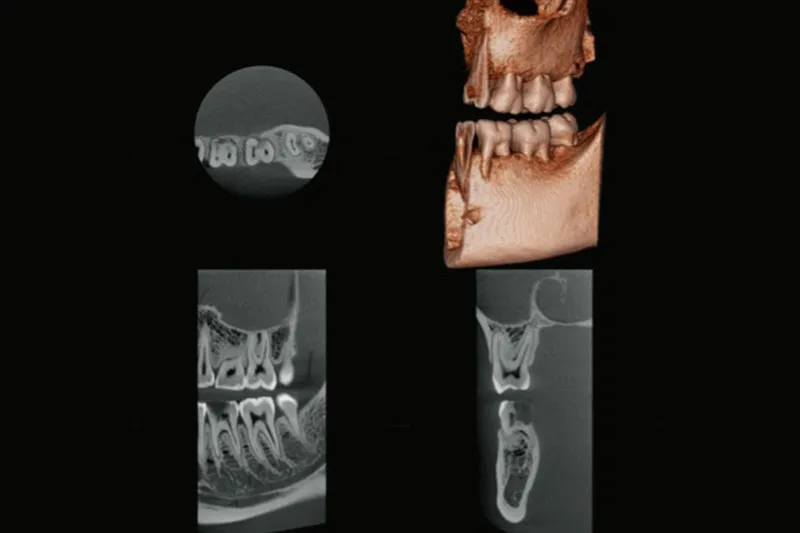
- 3D cone beam imaging to plan the procedure in detail
- Operating microscopes to see fine root anatomy clearly
- Ultrasonic instruments that work gently and help the area heal