
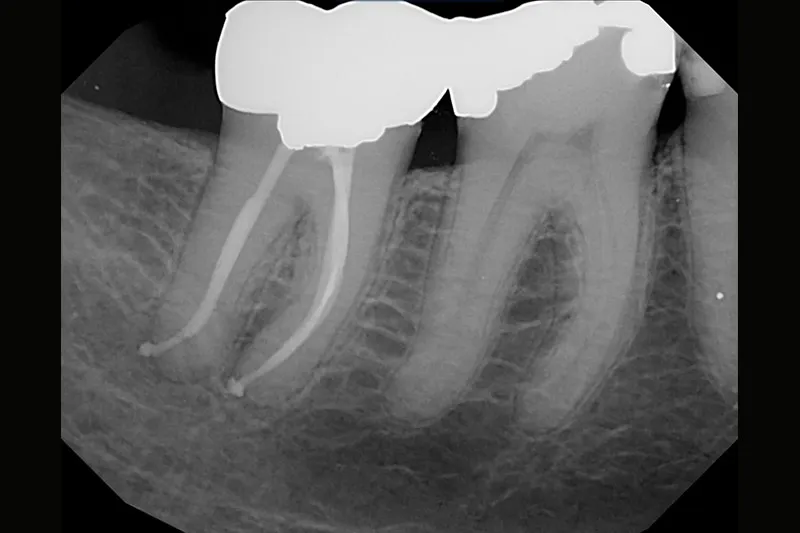
Diagnosis of Cracked Teeth
Finding how far a crack goes, so the tooth can be treated before it is lost.
A crack in a tooth can come from chewing something hard, grinding at night, an injury, or simply years of use. Cracks are often hard to spot, and some cause no symptoms until they grow. Finding one early can mean the difference between saving the tooth and losing it.
Signs to watch for
- A sharp pain when you bite that comes and goes
- Sensitivity to hot or cold
- Sore or swollen gum around one tooth
Constant pain, swelling, fever or a bad taste can mean a crack has let infection in. Call the office promptly if you notice these.
Types of cracks
- Craze lines. Tiny surface lines in the enamel. Usually harmless, though a night guard may be suggested.
- Fractured cusp. A break, often around a large old filling. Testing shows whether the nerve is involved and a root canal is needed before the tooth is rebuilt.
- Deep cracks. Cracks that run toward the root. Found early, many can be treated with a root canal and a crown. Cracks that reach far below the gum may mean the tooth cannot be saved.
How the crack is found
Dr. Fitzgibbons uses bite tests, nerve testing and 3D imaging to see how far a crack goes before recommending treatment.